

Tranquil and ancient, the waters of Catahoula Lake are deeper than most family roots that run through LaSalle Parish and older than the parish itself. It has recently been the topic of courtroom cases and decisions and on the lips and minds of all of those whose families have hunted its acreage and built traditions and memories in its seemingly ageless existence.
Hunters and sportsmen across Louisiana know the name and duck hunting is its brag, although it’s debatable that it is hunter friendly as many have lost their lives in the water and wind-filled expanse. While the face of time and the presence of people have come and gone, Catahoula Lake, or “Okkatahoula” (sacred, beloved, or clear lake) as indigenous people called it, is endlessly vast and runs deep in the mind and hearts of the people who know it and love it.
Catahoula Lake is the largest natural freshwater lake in Louisiana and is a depression or swamp lake that formed when an unknown seismic activity, perhaps an earthquake, caused the land to sink then fill up with water from nearby Little River. The area constituting the lake has both dry and wet periodic cycles and today annual flooding from the Little, Red, Ouachita (Black River) and the Mississippi Rivers contributes to the water levels. It covers just over 46 square miles and is known as the largest moist soil unit in North America supporting a host of waterfowl including geese, duck, and wading birds with thousands of migratory birds wintering on the lake annually. Lake levels can fluctuate as much as eighteen feet during a calendar year.
Spear points that are approximately ten thousand years old, have been found during archaeological surveys of the lake, supporting the presence of the lake’s first inhabitants, Native Americans. Indigenous people, including the Natchez Indians and bands of Choctaw Indians, historically used the area to establish villages and had a long-sustained relationship with the area.
Early stories deem this lake as the sacred lake of these first inhabitants, and they chose it for their religious rites. It is here that they prayed and offered sacrifices to Manitou, the Great Spirit. They believed that both moral and physical impurities were cleansed in the waters, even dipping their amulets and arrows in it for protection. Buffalos are said at one time to have dotted the lakebed during dry seasons. In recent times, hogs and cattle have foraged from the dry lake beds for food and fodder.
During the years of the Civil War, Catahoula Lake provided hideouts and safety for the infamous Jayhawkers who were Louisiana Unionists who opposed the state’s succession from the United States. Rebel deserters also found refuge in the area with Confederate authorities reporting that there were a “number of Jayhawkers in the vicinity of Catahoula Lake and Little River, very troublesome to loyal citizens and defying civil and military authorities.”
When the war ended, sportsmen returned to the area and commercial duck hunting became one of the most desired activities on the lake. In November 1875, Alexandria’s “The Louisiana Democrat” reported, “Wild ducks in great quantities have been flying southward over our town the past week. The hunters have been bringing some from Catahoula Lake into market, which are being retailed at 12.5 cents each.”
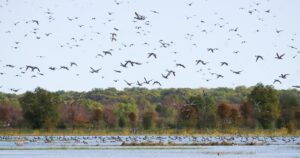
Catahoula Lake has been called the duck hunting Mecca of Louisiana, but it’s much more than that, and anyone and everyone acquainted with its ancient waters and lands has his or her own story to tell. Designated a lake in 1812, it has recently been ruled and deemed a permanent river that seasonally overflows and covers its banks, a decision that’s been disappointing for many who have enjoyed its waters through the decades. After 208 years of being public property managed by state and federal governments with access to area citizens and public, it is once again transitioning, flowing into the next generations of private ownership with new stories that will be written.
Several years ago, two landmark trees were removed from Indian Bluff in the Nebo area that overlooked Catahoula Lake, changing the landscape forever. People grieved that the beloved landmarks were so carelessly and thoughtlessly sacrificed. With the changing laws, it’s not unusual for people who have a history with Catahoula Lake to feel saddened as per the upcoming changes. The feeling of loss is a symbol of love, respect, history and quite natural, and change has a way of interrupting places, people, and memories that are cherished and valued.
The future of Catahoula Lake is yet to be discovered and lived but it is a sure fact that the citizens and community that have always loved it and valued its unmatched beauty will continue to do so. There are promises yet to be realized, and relationships with the ancient basin yet to be formed.
In the meantime, the placid waters slowly recede and increase with the changing seasons and times. The lake sets tranquil and peaceful and teems with wildlife, like it always has and hopefully always will be.